
BA, PhD
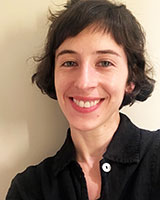
Instructor
andreaactis@capilanou.ca
Education
PhD, English, Brown University, 2017.
BA (Honours), English and Humanities, Simon Fraser University, 2007.
Bio
Andrea Actis (PhD, Brown University, 2017) joined the English Department in 2017. Her teaching, research, and creative work emerge from an ongoing interest in how certain affects and orientations—especially anger, seriousness, and spiritual seeking—are understood, represented, and activated in contemporary literature and culture. Most recently her work has focused on heterodox psychology, comparative mysticisms, and histories and theories of so-called “anomalous” or “paranormal” experience; on the politics and ethics of artificial intelligence; and on the roles of narrative and ritual in contexts of death, grief, and loss.
Actis received her BA in English and Humanities from Simon Fraser University and her PhD from Brown University, where she completed a dissertation on competing definitions, invocations, and performances of seriousness in the work of such writers as Laura (Riding) Jackson, Audre Lorde, David Foster Wallace, CAConrad, and Fred Moten.
From 2015–2017, Actis edited the literary and visual arts magazine The Capilano Review while overseeing its community programming. She remains an active member of The Capilano Review’s Editorial Board.
Actis’ work has received funding from the Social Sciences and Humanities Research Council and the Canada Council for the Arts. Her poetry, criticism, and art writing have been published in Fence, The Rumpus, World Picture Journal, Pelt and elsewhere. Her book Grey All Over, an experimental grief memoir, was published by Brick Books in 2021 and was longlisted for the 2022 ReLit Award.
In 2026 and 2027, Actis will be co-teaching the Psychology courses PSYC 341: Psychology of Religion and Spirituality and PSYC 343: Psychology of Anomalous Experiences.
My teaching interests include modern and contemporary American and Canadian literature, culture, and intellectual history; anticolonial and anticapitalist literatures and pedagogies; literary and cultural mediations of more-than-ordinary experience and more-than-human worlds; narrative and aesthetic engagements with death, grief, and loss; memoir, autobiography, and speculative nonfiction; documentary poetics and poetries of witness; and publishing and book design.
In literature and writing classes alike, I aim to teach a wide range of materials that require us to hold in mind both what we have in common with one another and what we might experience very differently. I encourage students, regardless of the particular course or assignment, to take seriously and write from their own experiences while remaining curious and humble about the limits of what they know. I also invite them to imagine new possibilities for how research might be undertaken, interpreted, and presented.