
BA, MA, PhD
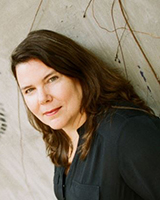
Coordinator, B.ESc, Biology Instructor
School of STEM
Biology
604.986.1911 ext. 7392
Fir Building, room FR496
cdingle@capilanou.ca
Education
PhD, Zoology, University of Cambridge, 2010
MA, Ecology and Systematic Biology, San Francisco State University, 2003
BA, Biology (Highest Honours), University of California Santa Cruz, 1996
Science in Society Program, Wesleyan University, 1994
Bio
Caroline Dingle (PhD University of Cambridge, 2010) is an evolutionary ecologist interested in the processes that generate and maintain biodiversity in both natural and disturbed habitats.
Dingle began her University career at Wesleyan University, a small liberal arts college on the east coast of the USA. Somewhat by accident, she took a first year ecology course (in her second year!) and discovered her academic passion. This led her to change universities to complete her undergraduate studies at the University of California, Santa Cruz – a wonderland for a budding naturalist and ecologist.
After receiving her BA in Biology, Dingle was offered an irresistible opportunity to live for over a year in the Amazon rainforest in eastern Ecuador helping run a study on tropical butterflies. Following a few years of working various field research jobs, she completed her MA at the Center for Tropical Research at San Francisco State University. After completing her MA, Dingle moved ‘across the pond’ to complete her PhD in Zoology from the University of Cambridge.
Following a postdoc studying bowerbirds in Australia, Dingle moved to Hong Kong and took up a position at the University of Hong Kong (HKU) where she taught courses in ecology and environmental science and conducted research on urban ecology, conservation, and wildlife trade. For several years, Dingle served as the Director of the Conservation Forensics Lab at HKU and worked with an interdisciplinary team to develop novel approaches to aid in the monitoring and enforcement of illegal trade of wildlife throughout Asia and globally. In 2022, Dingle moved back to North America and joined Capilano University in the fall of 2023. Here she teaches courses in biology, ecology and environmental science and hopes to inspire in students an excitement about the natural world and a desire to use their knowledge to make this planet a better place.
The best way to learn about science is to do science. One of my main goals as a teacher is to help students to see science as a process, rather than as a collection of facts that they need to memorize. Engaging in this scientific process early and often is the best way to learn how science is done – an understanding which provides students with the skills necessary to critically analyse scientific data in whatever career path they choose following the completion of their studies.
Mostly, I hope that students will find that science is fun and exciting and discover that they too can make contributions to increase our understanding of the world.
I am an evolutionary ecologist with broad interests related to how human activities impact biodiversity.
Main research themes include:
- Urban Ecology and Evolution
- Wildlife Trade
- Behavioral Ecology
- Speciation
Select Publications
Dingle C*, Allcock JA, Ricca P, Leader PJ, Hatten CR, Merila J. (2025) Geolocator tracking and stable isotope analysis suggest mixed migration strategies in White‐shouldered Starlings (Sturnia sinensis). Ecology and Evolution 15: e71151.
Bonebrake TC, Tsang TPN, Yu N, Wang Y, Ledger MJ, Tilley HB, Yau EYH, Andersson AA, Boyle MJW, Lee KWK, Li Q, Ling YF, Dongmo MAK, Güçlü C, Dingle C, Ashton LAA. (2025) Tropical cities as windows into the ecosystems of our present and future. Biotropica 57(1): e13369.
Prigge T, Andersson A, Hatten C, Leung E, Baker DM, Bonebrake TC*, Dingle C*. (2024) Wildlife trade investigations benefit from multivariate stable isotope analyses. Biological Reviews. DOI: 10.1111/brv.13175
Andersson AA, Sands AF, Reid K, Hains T, Momigliano P, Lee J, Lee G, Rheindt FE, Merila J*, Dingle C*. (2024) Museomic data sheds light on evolutionary diversity in a critically endangered cockatoo species from Wallacea. Molecular Ecology: e17616.
Hatten CER*, Hadiprakarsa Y, Lee C, Jain A, Kaur R, Miller A, Cheema S, Nyat Jun A, Abd Khalid SS, Dingle C*. (2024) Predicting conservation priority areas in Borneo for the critically endangered helmeted hornbill (Rhinoplax vigil). Global Ecology and Conservation 55: e03206.
Tinsman JC, Gruppi C, Bossu CM, Prigge T-L, … Dingle C, Ruegg K, Bonebrake TCB, Smith TB. (2023) Genomic analyses reveal poaching hotspots and illegal trade in pangolins from Africa to Asia. Science 382 (6676):1282-1286.
Wierucka K, Hatten CER, Murphy D, Allcock JA, Andersson AA, Bojan JWN, Kong TC, Kwok JK, Lam JYK, Ma CH, Phalke S, Tilley HB, Wang RS, Wang Y, Webster S, Mumby HS, Dingle C*. (2023) Human-wildlife interactions in urban Asia. Global Ecology and Conservation: e02596.
Hatten CER, Tilley HB, Hadiprakarsa Y, Dingle C.* (2022) Three birds with one stone? Sex ratios of seized helmeted hornbill casques reveal illegal hunting of males, females & juveniles. Animal Conservation 26(4): 502-515. DOI: 10.1111/acv.12838
Dufour P, Miot E, So TC, Tang SL, Jones E, Kong TC, Landry Yuan F, Sung YH, Dingle C, Bonebrake T. (2022) Home and hub: pet trade and traditional medicine impact reptile populations in source locations and destinations. Proceedings of the Royal Society of London Series B 289: 20221011.
Yuan FL, Yeung CT, Prigge T-L, Dufour PC, Sung Y-H, Dingle C, Bonebrake TC. (2022) Conservation and cultural intersections within Hong Kong’s snake soup industry. Oryx: 1-8.
To A, Dingle C, Collins S. (2021) Multiple constraints on urban bird communication: both abiotic and biotic noise shape songs in cities. Behavioral Ecology 32(5): 1042-1053.
Andersson AA, Gibson L, Baker DM, Cybulski J, Wang S, Leung B, Chu LM, Dingle C*. (2021) Stable isotope analysis as a tool to detect illegal trade in critically endangered cockatoos. Animal Conservation 24(6): 1021-103.
Andersson AA, Lau W, Tilley HB, Dudgeon D, Bonebrake TC, Dingle C*. (2021) CITES and beyond: illuminating 20-years of global, legal wildlife trade. Global Ecology and Conservation 26: e01455.
McMillan SE, Dingle C, Allcock JA, Bonebrake TC. (2020) Exotic animal cafes are increasingly home to threatened biodiversity. Conservation Letters 14(1): e12760.
Chan HS, Dingle C, Not C. (2019) Evidence for non-selective ingestion of microplastic in demersal fish. Marine Pollution Bulletin 149: 110523.
Bonebrake TC, Guo F, Dingle C, Baker DM, Kitching RL, Ashton LA. (2019) Integrating proximal and horizon threats to biodiversity for conservation. Trends in Ecology and Evolution 34(9): 781-788.
Dingle C*, Slabbekoorn H. (2018) Multiple functions for pair duets in a Neotropical wren Henicorhina leucophrys. Animal Behaviour 14: 67-76.
Other Writing
Dingle C. (2022) Gray-breasted Wood-wren. In: Elusive Birds of the Tropical Understory. Eds Whitelaw JP, Brawn JD, Pollock HS, Fitzpatrick JW. Cornell University Press, New York, USA.
2020 University Excellence Awards - Knowledge Exchange (The University of Hong Kong)
2019 University Outstanding Teaching Award (The University of Hong Kong)
2019 Faculty of Science Knowledge Exchange Award (The University of Hong Kong)
2009 Staff Merit Award, University of Exeter
2004 - 2009 Gates-Cambridge Research Scholarship
2001 Fulbright Fellowship
1996 Elected Phi Beta Kappa (Honor Society), UC Santa Cruz Chapter