Don't stop believin': Getting to know Vicki St. Pierre
Published9 October, 2026
Photo credit Patrick Leung & Erica Yeung
CapU's new provost & vice-president academic reflects on student success, values-based leadership and the opportunities shaping the university's future.
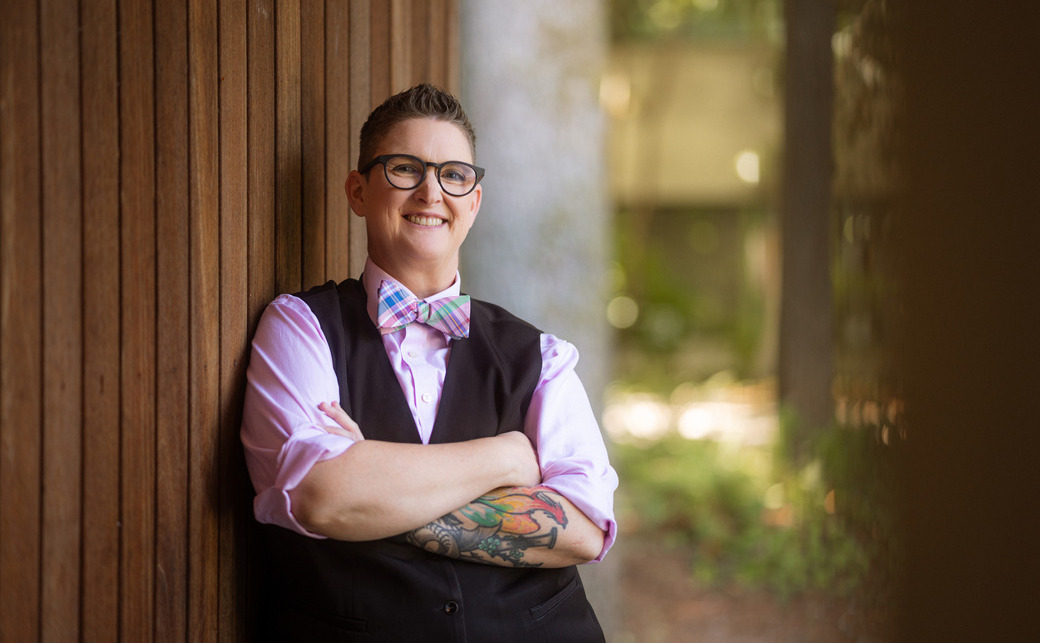
From performing on international stages to leading academic institutions, Capilano University's new Provost & Vice-President, Academic Dr. Vicki St. Pierre brings a unique perspective to higher education. We sat down with St. Pierre to talk about music, leadership, student success and why she believes CapU is at a once-in-a-lifetime moment.
You've built a career as a musician, educator and academic leader. What first drew you to higher education?
It actually started through teaching.
I was in the middle of a busy performance career, conducting, singing, giving workshops and masterclasses, while running private voice studios with students ranging from age five to 65. The more I taught, the more I realized, "I'm good at this. I really enjoy it."
That curiosity led me to dig deeper into pedagogy and evidence-based teaching practices. Eventually, I realized I wanted to pursue teaching at the university level and help shape how students learn and grow. That's what led me to complete a doctorate and begin my academic career.
What I discovered along the way is that education isn't just about sharing knowledge. It's about helping people discover what they're capable of.
How has your experience as a musician influenced the way you lead?
More than people might imagine.
Music teaches collaboration at an incredibly high level. Whether you're performing in a choir, chamber ensemble or orchestra, you learn how to contribute your voice while also listening to everyone around you.
As a musician, you're constantly balancing multiple streams of information, anticipating what's ahead and working toward a shared outcome. Leadership isn't that different.
Leading a university feels a lot like leading an ensemble. Sometimes you're setting the vision and direction. Other times you're collaborating as part of a larger team. And often you're inviting people to join you on a journey rather than simply telling them where to go.
I like to think of leadership as a call rather than an imposition. It's saying, "Come with me. Here's where we're going and here's why."
People are much more willing to move forward together when they understand the purpose behind the work.
“We have a chance to think carefully about the kind of institution we want to become, whose voices are centred, how reconciliation and decolonization inform our work, how we support students and how we strengthen our academic programs.”
What attracted you to CapU?
Opportunity.
CapU is at a moment where meaningful change is possible, and that's exciting.
Throughout the interview process, I saw a university that is genuinely student-centred, deeply community-focused and interested in building a sustainable future. I felt my experience and personality aligned with what CapU needs right now.
Universities across the country are facing challenges and difficult decisions. What attracted me to CapU was the sense that people here are ready to do the work thoughtfully and collaboratively.
And yes, I won't pretend that trading New Brunswick winters for the North Shore wasn't part of the appeal.
What excited you most about this moment in CapU's history?
The chance to help shape the future.
This isn't about titles or personal legacy. It's about creating conditions today that will benefit students and employees 10 or 20 years from now.
Opportunities like this don't come along very often.
We have a chance to think carefully about the kind of institution we want to become, whose voices are centred, how reconciliation and decolonization inform our work, how we support students and how we strengthen our academic programs.
That kind of long-term impact is what motivates me.
What do you hope students experience during their time at CapU?
I want them to have an exceptional education, of course. But beyond that, I want them to feel that they belong.
I want students to find community here. I want them to make friends, explore new ideas, participate in experiences outside the classroom and discover more about themselves.
Whether you're a mature student, an international student, studying part time or full time, I want every learner to feel that there is a place for them at CapU.
The goal isn't simply graduation. It's helping students leave as more confident, capable and self-aware people than when they arrived.

People might assume someone with a doctorate and a successful career always excelled academically. Was that your experience?
Not at all.
I had two failing grades on my undergraduate transcript.
Students are sometimes surprised when I tell them that, but I think it's important. My academic journey wasn't perfect. I made mistakes, learned difficult lessons and had to figure things out along the way.
What matters isn't whether you stumble. What matters is how you respond and whether you keep moving forward.
I want students to know that one setback does not define who they are or what they're capable of becoming.
What might people be surprised to learn about you?
Besides the failed courses?
I love sports, I ride a motorcycle and my music playlists are completely unpredictable.
Speaking of playlists, what are you listening to right now?
One minute I'm listening to Bach or early Baroque music written by Italian nuns, and the next I'm singing along to '80s hits.
I have absolutely no shame about my love of '80s music. None whatsoever.
Let's just say my playlist moves comfortably from choral masterpieces to ACDC, with a stop at Barenaked Ladies along the way.
Welcome to CapU, Dr. St. Pierre. While her playlist may span centuries, her vision for the future is firmly focused on helping CapU students and employees thrive together.