Harold López-Nussa Quartet
Cuban jazz innovators.
Havana-born pianist Harold López-Nussa’s music pulses with the richness of Cuban music, with its distinct combination of folk, pop and classical music elements, as well as its embrace of jazz improvisation.
The son of a pianist mother and jazz drummer father, López-Nussa released a number of albums before being signed to jazz music’s most influential label, Blue Note in 2023. He has since released two critically acclaimed albums, the five-star rated Timba a la Americana, in 2023, and its brilliant follow-up Nueva Timba, late last year.
Championed as the future sound of Cuban jazz by none other than the legendary godfather of the genre, Chucho Valdes, López-Nussa’s playing is beautifully virtuosic with energetic quick-fire flourishes and high-wire musical configurations.
Classically trained, López-Nussa quickly established his jazz credentials, winning both the first prize and the audience prize for solo piano at Switzerland’s prestigious Montreaux Jazz Festival when he was just 21.
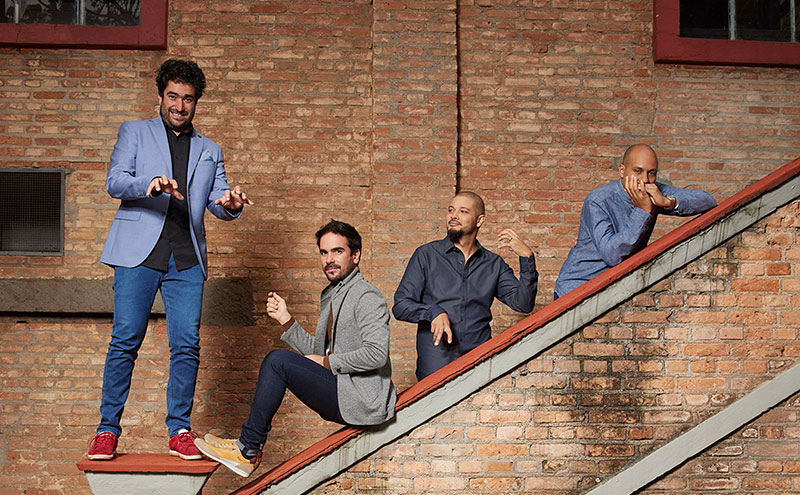
His music is joyous, upbeat Afro-Cuban jazz, delivered with infectious energy by a quartet that includes his brother, drummer Ruy Adrián López-Nussa, bassist Luques Curtis and the harmonica virtuoso Grégoire Maret.
“My influences come mostly from my country, and the way that people live in Havana. My family is a very musical family,” says López-Nussa, who is now based in France. “We are almost all musicians. Some of us are professionals, others just music lovers, but music is a huge part of who we are.”
He cites, among many others, Cuban piano players Bebo Valdés, Frank Emilio Flynn, and Rubén González, and such American jazz pianists as Bill Evans, Chick Corea, and Herbie Hancock as influences. And then there’s the great Valdés.
“Chucho is one of my favorites,” López-Nussa says. “I’m still learning from him. He’s one of my heroes, and every time I hear Chucho playing, I enjoy him like a child. He was a big influence on my way to find my own voice.”
A percussive pianist, López-Nussa brings rhythmic complexity to his playing. “Rhythm is very important in Cuban music,” he says. “Our country is rich in percussion. Rhythm is part of the life of the people, so this expression is inside.”
“One of the most gifted of his generation” – Le Monde
Contact