


2025-26 Donor Impact Report

President's Message

Dear friends and supporters,

When I first rode my bike onto the Capilano University North Vancouver campus, it was for a family outing that left me driven by a new goal and dream to one day lead this university. It was my honour to step into the role of president this spring. It is my hope that the same profound sense of possibility strikes each student who begins their education at CapU.

The path forward isn't always easy for students. Rapidly changing technology and an uncertain job market can make the future feel more daunting than exciting. What makes the difference is people who believe in students before students fully believe in themselves. I see that belief every day in the way CapU employees engage with students. It's a belief your generosity makes possible.

At its heart, philanthropy is an investment in people. Your gifts help students realize their potential, achieve their goals and build meaningful careers. Many will go on to create opportunities for others, continuing a cycle of generosity that strengthens both our university and the communities we serve.

The 2025–26 year has been one of transition at CapU. I joined as president in March with gratitude for Interim President Dr. Laureen Styles, who was a steady steward of an institution in flux. This year also marked the completion of Chancellor Yuri Fulmer, OBC's second term and the welcoming of Debi Doucette, OBC, as our fifth chancellor. Throughout it all, the priorities of Envisioning 2030 and Illuminating 2030 have continued to guide leadership and decision making.

When you read about students like Cameron and Kaveh or hear from an alumnus like Darcey, whose time at CapU was four decades ago, it becomes clear your support reaches beyond a single academic term or a single student. While the financial assistance is significant, students often tell us that knowing someone believes in their potential is equally meaningful. Your support provides both practical relief and powerful encouragement.

Thank you for being a part of what makes CapU possible.

Jason Dewling, PhD

President & Vice-Chancellor
Capilano University

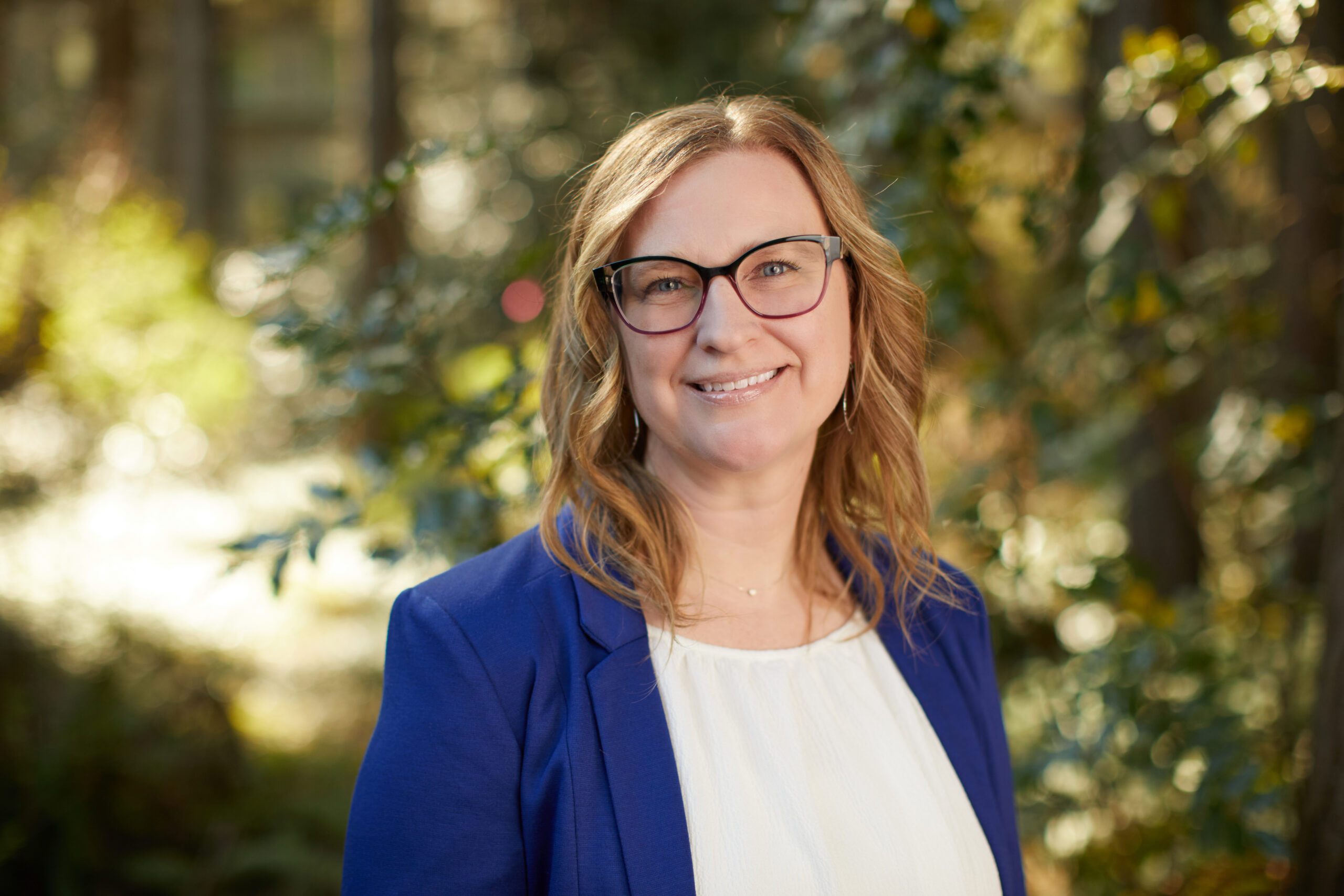
Jason Dewling, PhD, President & Vice-Chancellor, Capilano University
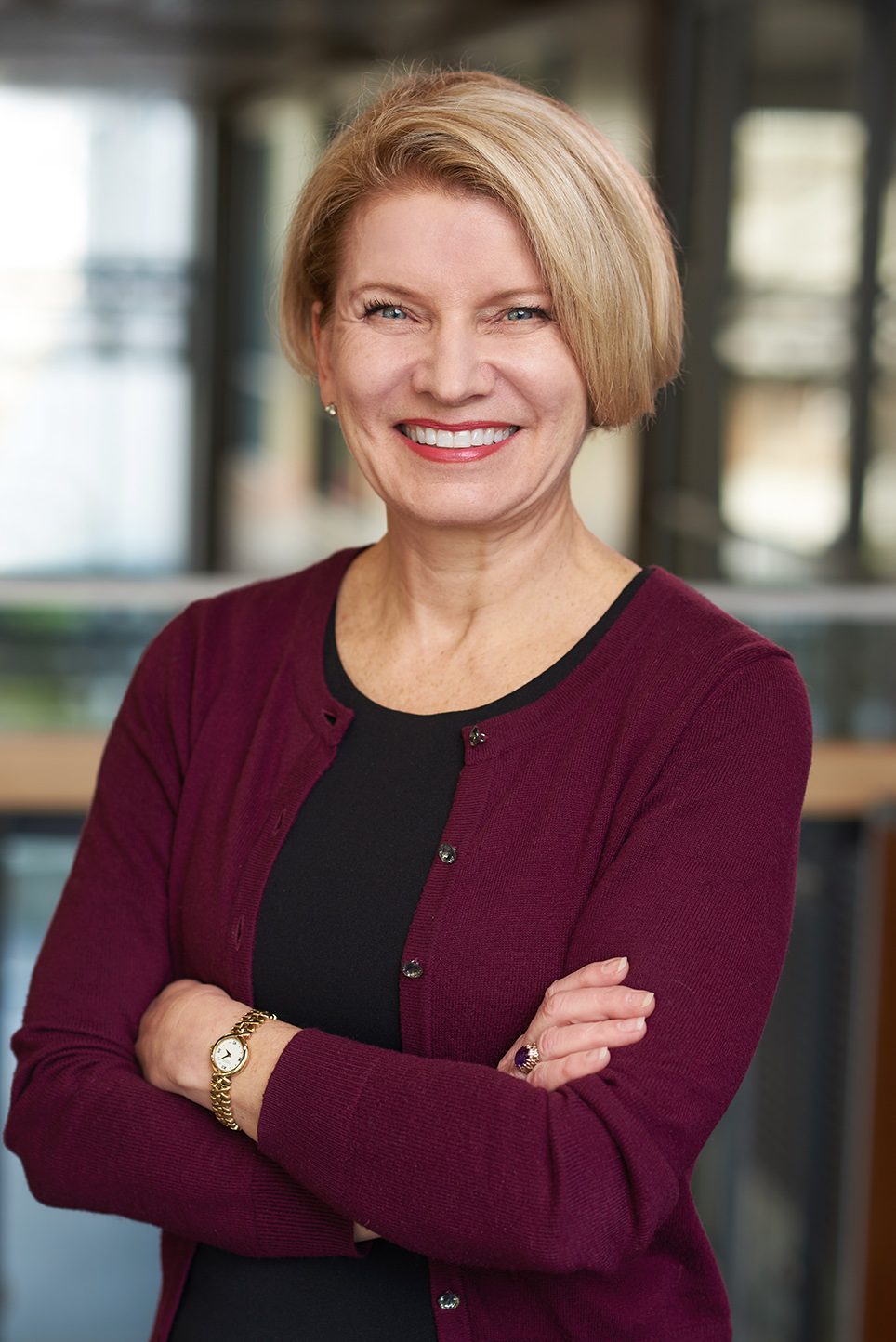
PLACEHOLDER — replace with Mary-Ann Booth portrait

CapU Foundation Board Chair

Something remarkable happens when a community decides to invest in its own people. This year, 815 students at Capilano University experienced that firsthand—through scholarships, bursaries and opportunities made possible entirely by donors like you.

Behind each of those numbers is a person: someone who stayed in school because the financial pressure lifted or who took a leap toward a dream career because someone they'd never met believed it was worth funding.

We think it's important that you hear their stories.

Students like Isabella Bolognese, who says scholarships gave her the confidence to achieve more than she thought possible. Without the support from the CapU Foundation, she would not have reimagined her goals and set her sights on both student-athlete wins and future advanced degrees. Students like Luke who are learning that their futures are fuller than they ever thought before. Community neighbours like Zack Bhatia who are investing in future generations. Three very different people, one shared belief—education changes lives.

It is this belief that keeps this community going. It's the power of the more than 900 donations we received this year and what we hope you'll continue to be a part of.

On behalf of the board and everyone at the CapU Foundation: Thank you. Not for the transaction, but for your trust.

Mary-Ann Booth

Chair
Capilano University Foundation

Investing in Student Success

CapU endowment management

Endowments are held by the Capilano University Foundation with oversight from the University's Board of Governors, under the guidance of its finance committee. They carefully monitor the impact of current market conditions and the performance of the Foundation's endowment.

The Capilano University Endowment is now valued at over $22 million. The large endowment is comprised of individual endowments that have been established by donors. The investment income generated each year by the endowment is used to support scholarships, bursaries, awards and specific projects or programs in various faculties.

Each endowment is established by dedicated and generous donors or companies for a specific purpose. By creating an endowment, donors like you create a lasting legacy of support for students.

$25,000 Minimum required to establish an individual endowment
3.5% Last year's annual distribution rate, reviewed by the finance committee and approved by Foundation directors
Capilano University Endowment Fund — principal growth As of March 31, 2026
$22,285,177
$16,877,0562022
$16,508,0152023
$17,672,3012024
$19,959,4142025
$22,285,1772026
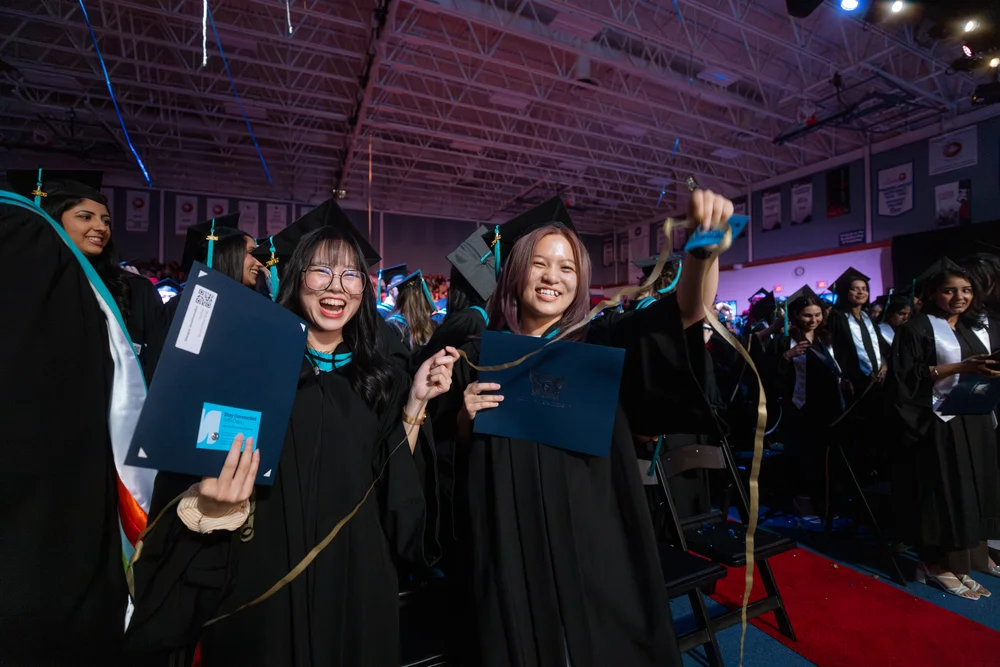
Capilano University convocation

Vice-President, External Relations

Philanthropy creates a ripple effect: a single gift reaches one student and then keeps going. It strengthens a family, enriches a community, and sends someone into the world ready to give back in ways we may never fully trace.

That is what I see in the generosity of our donor community, and it continues to inspire me, 14 years into my CapU journey.

2026 has been a year of new beginnings. We welcomed Dr. Jason Dewling as president this spring, alongside a renewed energy around our university's future.

We also welcomed a new chancellor, Debra Doucette, a 2024 honorary degree recipient and executive chair of Odlum Brown. We celebrated the inaugural recipients of the President's Entrance Award, students like Cameron, whose journey at CapU is just beginning, and whose potential your generosity is already helping to support.

The cost of post-secondary education continues to rise. I know this firsthand as a parent of a student who graduated from a university program this June. There is no question donor support helps ease students' financial pressures and reassures them that they are part of a community invested in their success.

On behalf of CapU, thank you for believing in our students and in the power of education to transform lives. Your support does more than remove barriers: it creates opportunities, builds connections and fosters a sense of belonging that stays with students long after they graduate.

We are grateful to have you as part of the CapU community and look forward to sharing the impact of your generosity in the years ahead.

Kari Wharton

Vice-President, External Relations
Capilano University

Kari Wharton, Vice-President, External Relations, Capilano University
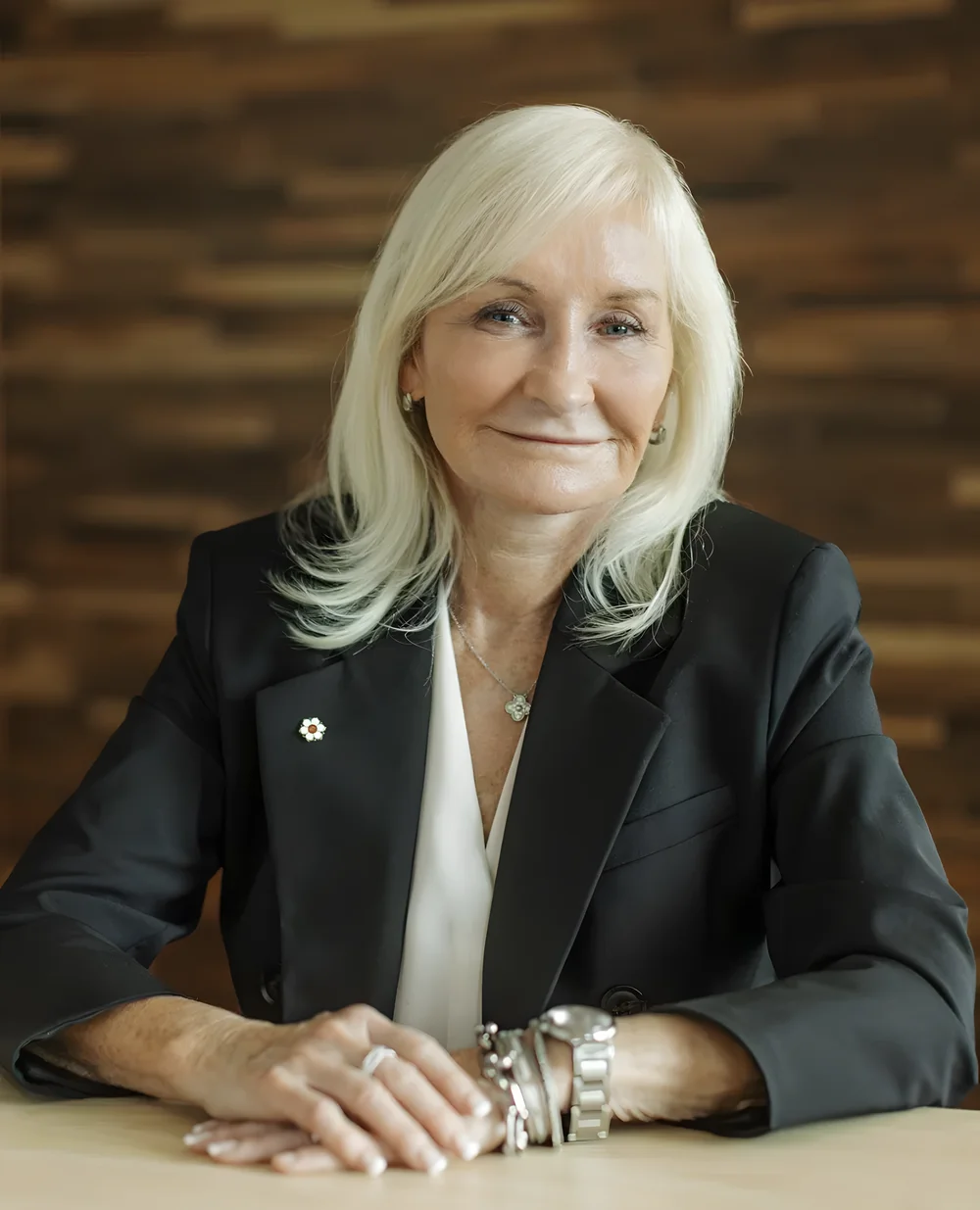
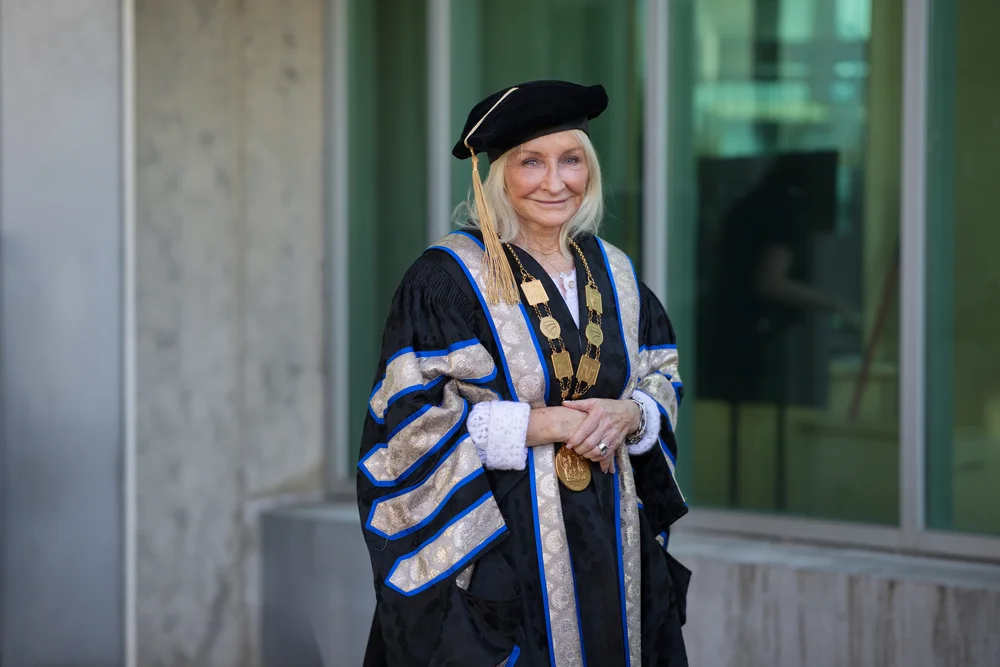
Debi Doucette, Chancellor of Capilano University Debi Doucette in full chancellor regalia at convocation
Debi Doucette, OBC
Chancellor
Capilano University
The Chancellor

Lessons in generosity

Sitting at the tiniest of tables in a Vancouver daycare, a fleeting conversation with a preschooler in a yellow coat defined Debi Doucette’s giving mindset. Years later, Capilano University’s newest chancellor still returns to that conversation.

“I learned so much from that three-year-old,” said Debi. “She had received a jacket I donated and was telling me who she would give it to next. It wasn’t her best friend; it was the boy who sometimes didn’t have lunch.”

That brief exchange became a lasting lesson about generosity — one that has shaped both Debi’s personal giving and her decades leading corporate philanthropy at Odlum Brown. She has come to believe four things about supporting a community.

“I fundamentally believe that philanthropy is an act, and when you start to reframe it from a monetary donation, it means anyone can do it within their capacity,” she explained. “For some, it’s writing a cheque, for some it’s getting involved, for others it’s sharing the cause or donating $5.”

It was corporate giving that taught Debi to dig deeper for causes that need support. “At Odlum Brown, we’ve been proudly BC-based for over 100 years, and we’ve always been connected to our local communities. These connections help us discover local organizations that we can really make a difference for through sponsorship, both through the financial support and by helping them raise their profile. That focus, on the communities where we actually live and work, allows us to make a real impact.”

Debi grew up in a family where advocating for others was the norm. Her sister and mother fought to help establish group homes and inclusion in the public school system for people with physical disabilities. When an opportunity arose to give back to United Way, which had supported her family through those challenges, Debi became an impassioned champion. “We weren’t wealthy by any means, but we were comfortable, and we were lucky. ‘You have a responsibility to help others,’ is how I was raised, and we saw my mom doing it right.”

Doing it right is very important to Debi, and that same sense of responsibility now shapes her role as CapU’s chancellor. “I am in my learning phase. I don’t want to go in and say, ‘I want you to do this.’ I want to learn what it is we need. How can we find a path together to accomplish that? I believe that universities are connection points and cornerstones of communities. I hope that I can help CapU be even better, and I will be pushing for that.”

“I just think that I’ve been lucky. If I can use some of my talent or some of my treasure or time to help someone or something along, that’s great. But what I’m doing is simply an act, and every single person is capable of an act — even a three-year-old!”

“I fundamentally believe that philanthropy is an act.”

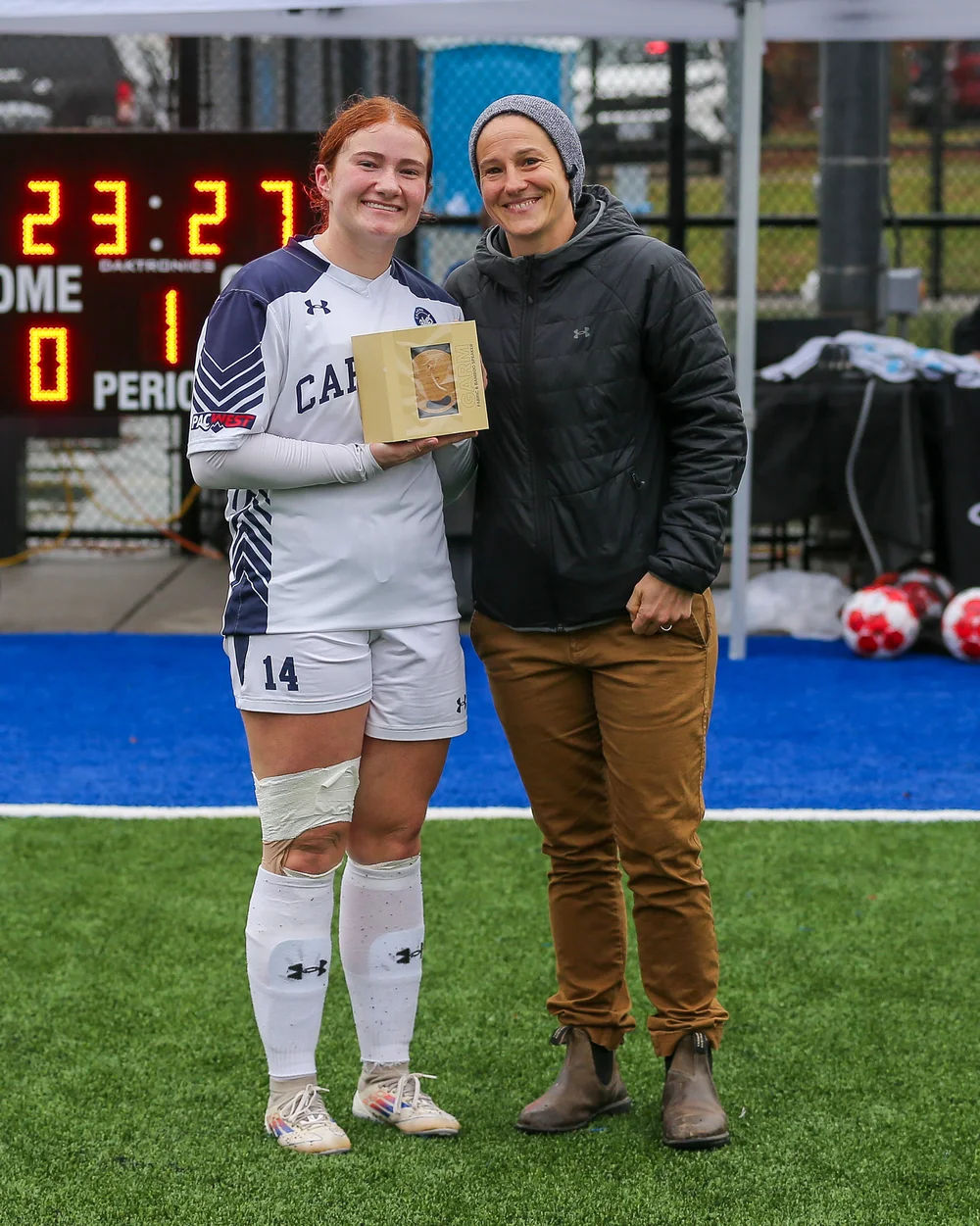
Isabella Bolognese, Capilano Blues student-athlete Isabella receives the Joseph Iacobellis Athletics Award Isabella on the pitch for the Capilano Blues
Isabella Bolognese
Bachelor of Kinesiology student
Opportunity · Confidence

Donors driving success

Inspired by receiving an entrance award, CapU’s Isabella Bolognese is thriving with a “mindset of success” and accomplishing more than she ever imagined.

“Coming to CapU and being a university athlete is a top-three moment in my life: in 2024 CapU had the privilege to host the Canadian Collegiate Athletic Association Women’s Soccer National Championship. We placed third on our home field, and I was recognized as MVP of the bronze medal game.”
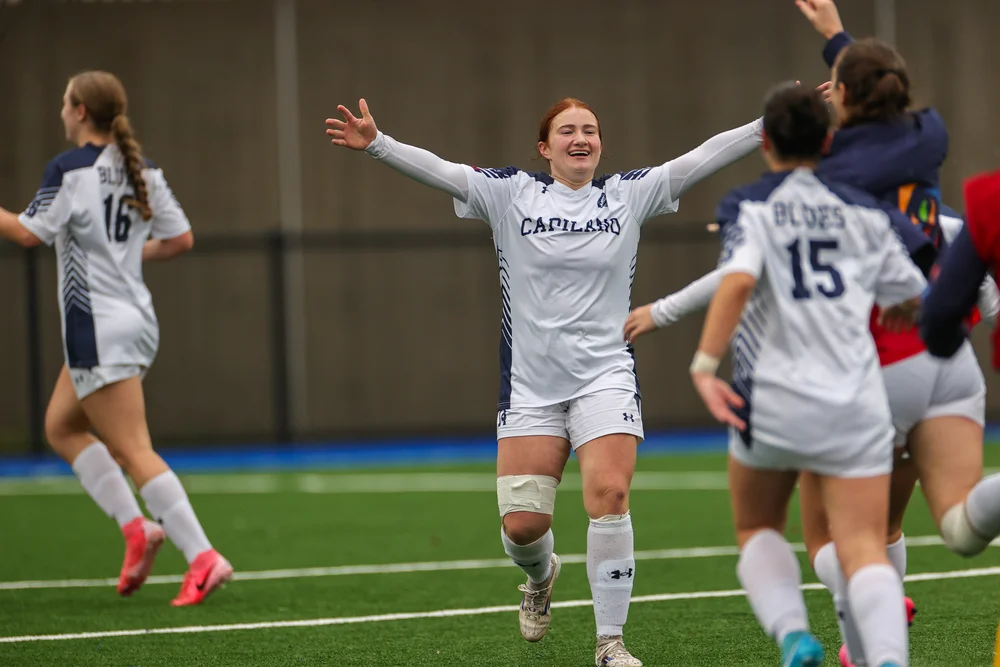
Isabella celebrates with teammates after a Capilano Blues match
Isabella celebrates with teammates after a Capilano Blues match.

While helping the team win bronze, Isabella is the gold standard for being a CapU Blues student-athlete. During her three years at CapU, she has been awarded numerous scholarships and financial awards, including the Joseph Iacobellis Athletics Award for soccer. Established to honour the impact of Joseph Iacobellis’ leadership as Capilano University’s athletic director from 1991–2012, the award recognizes outstanding athletes on the Blues varsity teams. Just like some healthy pressure on the pitch, the scholarships and awards motivated her to strive for excellence.

Donors really allowed me to thrive in the university environment.

— Isabella Bolognese, Bachelor of Kinesiology student

“In high school, you hear a lot about how your GPA is going to drop in university. A scholarship requiring that I maintain a 3.5 [GPA] really pushed me to succeed in my first year of classes when I was really nervous.”

It was like someone else was sharing their confidence in her abilities, said Isabella. This has had a lasting impact on her grades, how she spent her time and ultimately, her goals for the future.

Financial support has made it easier to get involved in the Capilano University community, find a job on campus and give back to the soccer team that has given so much to Isabella.

“I always felt welcomed here, and now, coming into my fourth year, I get to be the person who is welcoming all the new girls,” she said. “A lot of them come in, and they’re anxious and nervous. I will take them under my wing.”

Isabella is quick to point out that the staff, coaches, trainers and donors make it easier to balance the significant demands of being a full-time student and varsity athlete.
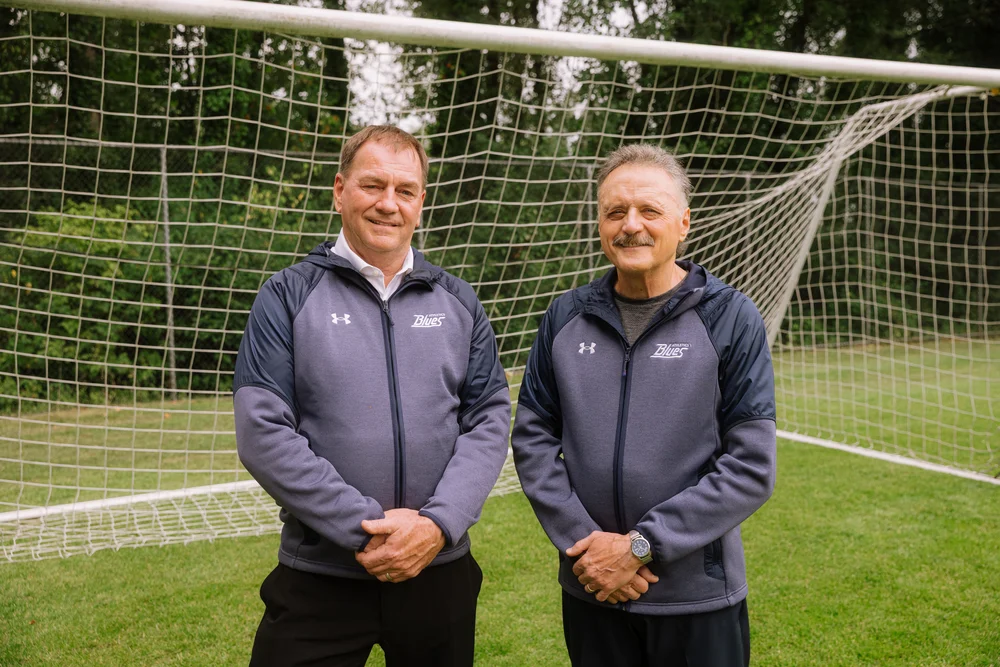
Isabella with a member of the Capilano Athletics staff
Former CapU Athletic Director Joseph Iacobellis with Isabella, recipient of a Joseph Iacobellis Athletics Award.

“There’s a huge financial pressure to be able to afford this or go into student debt, which a lot of people do nowadays because it’s very expensive.”

She has seen students struggle to keep up their grades or balance the demands of being an athlete, which ultimately means they leave CapU. Financial support helps level the playing field, she says.

“These awards and these donors really give students like myself the opportunity to succeed and takes away some of those barriers that are normally in front of you. It’s such a privilege to be able to receive these donations. I really don’t know what I would have done. I would have probably still been working two jobs and taking fewer classes which would have pushed my graduation a little bit later. Donors really allowed me to thrive in the university environment.”

As she enters her last year of her kinesiology degree, Isabella is deeply aware of enjoying her last season as a Blue.

“When you become a varsity athlete, it becomes a part of you. It’s very hard to give up. We just had a fitness test, and I caught myself saying: ‘This is my second-to-last time running the Bronco.’ Even the unfun things become a part of your identity. I think people would rather go into debt than miss these opportunities.”

If being a game MVP and playing for nationals was a “top-three” moment, it begs the question for a driven, determined student-athlete like Isabella: what tops her list?

“I might have to put it up to number two. No, maybe being a CapU varsity athlete IS number one, but I have to save space for other things. I have plans for my future.”

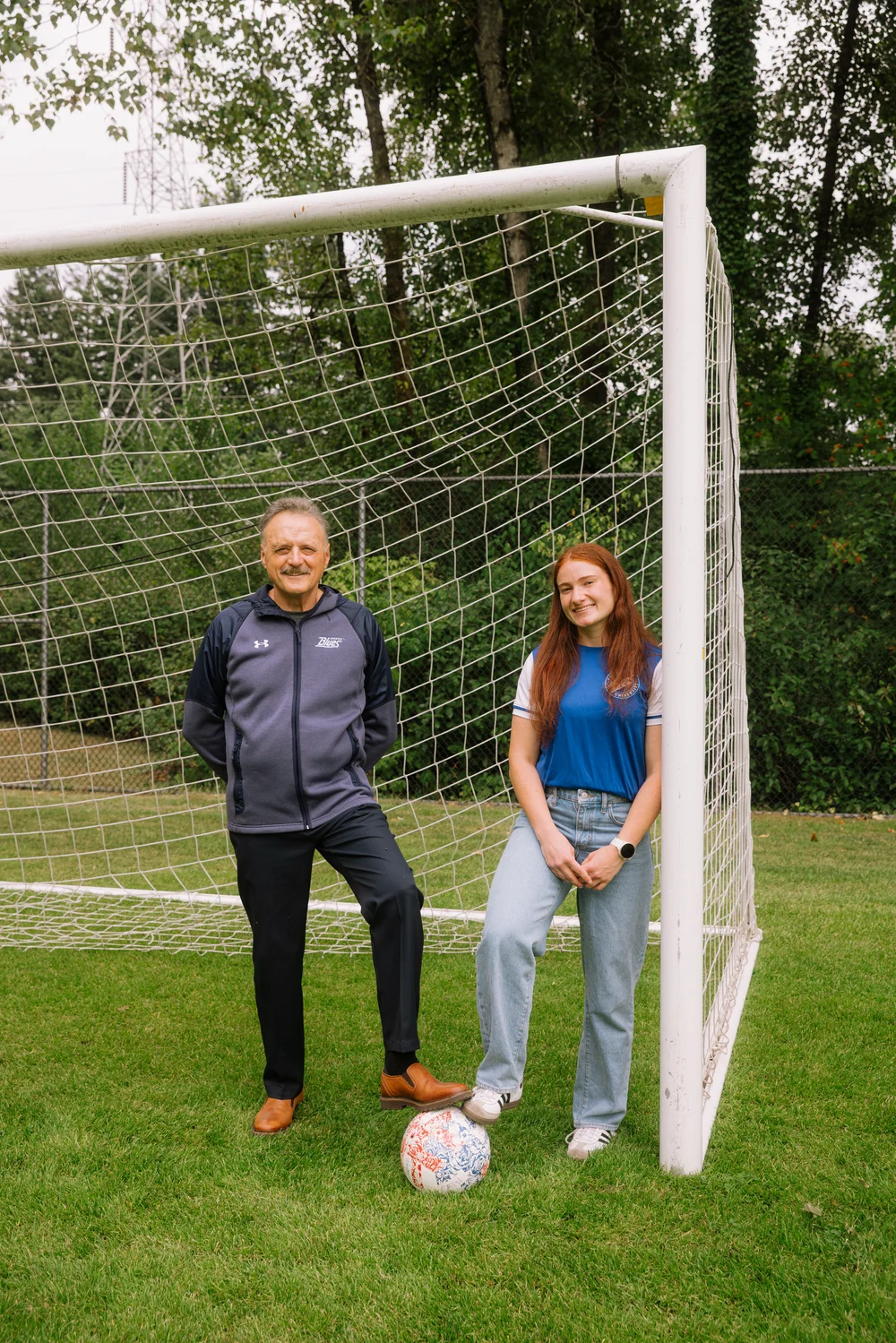
Darcey Houser and Joseph Iacobellis at a Capilano Blues soccer pitch
Gratitude · Mentorship

Helping the future to honour mentors

When good people inspire good people, the knock-on effect can’t be stopped, muses Darcey Houser, a 1980s Capilano Blues Soccer player. Being a student-athlete got him in the door to Cap College (now Capilano University), but it was a coach that inspired him to stay.

“Joe was the best coach I ever had,” said Darcey, speaking of Joseph Iacobellis, Capilano University’s athletic director from 1991-2012. “Joe inspired me to coach. When my kids were young, I started coaching, and I coached them all the way through. How many people has Joe coached over the years? How many people like me became coaches because of what they learned from him?

“I’m sure thousands and thousands of young people over the years. Young men and women, and that ripple effect still is going on today. I just saw one of the guys I coached; he just had a little girl. What is he most excited about? He gets to be a coach! That all goes back to Joe.”

Darcey Houser
Darcey Houser
Capilano Blues Soccer, 1980s

That inspiration and some of the financial challenges Darcey experienced growing up prompted him to donate to the Joseph Iacobellis Athletics Award. When Darcey was young, his family had to make difficult choices. He played soccer because the fees were $5 instead of football’s $10, and he didn’t need to buy pads. Unable to afford post-secondary education after high school, Darcey became an entrepreneur at 18—a path that eventually led him to own Commercial Drive’s Freshmart grocery store.

“College wasn’t really in the cards for me, because, you know, my parents couldn’t afford it, so I always worked. I was 25 when I went back to college. And paid for it myself. I didn’t have any loans or anything like that. I just invested in myself.”

While splitting his time working away as a fishing guide in Vancouver, Darcey continued playing soccer. Conversations with teammates on a Capilano College alumni team eventually led him back to school—and to Joe Iacobellis.

“They all spoke very highly of Joe, and so when I decided to go to college, I went to Cap,” said Darcey. “He worked us hard. Another thing I really liked about Joe was in the very first practice that we had, he set the goal that we’re going to win the provincials. And at first I thought, ‘Wow, this guy’s got big dreams.’

“But then, as we started winning, and, you know, I started believing. The whole team did.”

That winning combination of big dreams and hard work continues to influence Darcey. Today, whether sponsoring a local high school fundraiser, supporting employees’ ambitions or giving to CapU, he continues to invest in others.

“Things aren’t always easy, but it’s a good thing in life that you can choose your heroes—and choose to help. Sometimes that’s time and sometimes that’s money. I have been successful, but I didn’t get here by myself. I worked hard but so many good people have been important guiding forces.”

“Things aren’t always easy, but it’s a good thing in life that you can choose your heroes—and choose to help.”

— Darcey Houser, Capilano Blues soccer player, alumnus
Alex Aslanowicz and Luke Chaplin, Discover Employability Certificate Program students
Growth · Possibility

Daring to dream bigger

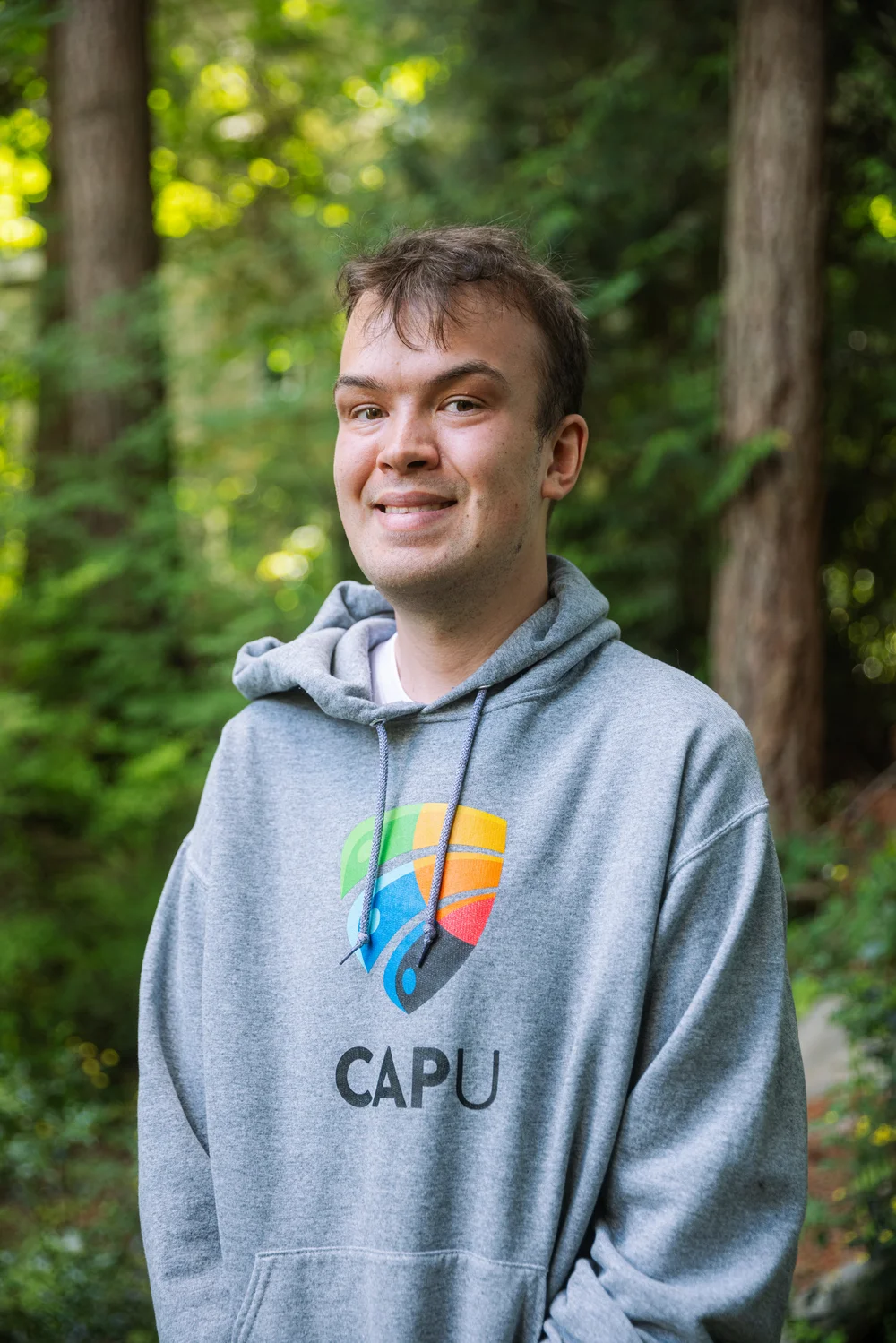
Hopping off the bus and into North Vancouver Tennis Centre, Alex Aslanowicz was excited to be part of a team. Working the front desk gave him the opportunity to apply the skills he was learning through Capilano University’s Discover Employability Certificate Program (DEP), an eight-month career training and exploration program for young adults with learning differences. Thanks to a Scotiabank ScotiaRISE grant, the program is expanding this fall.

“I got to work in three places. At the tennis facility, I worked with customers, helped do daily accounting and they helped me do really well at it,” said Alex. But as good as that job was, it was not his favourite. “I liked working in the grocery store a lot because I was on a team, but I had to work by myself and help customers by myself.”

Alex Aslanowicz
Alex Aslanowicz
Discover Employability certificate, 2026

That newfound confidence is a key marker of success, says Alison Hale, instructor, Access Work Experience, Faculty of Education, Health and Human Development.

“Kindergarten to grade 12, it’s a given right that you have access to education, but beyond that, it’s not. The opportunity to mature and grow and learn new things and feel like you’re part of your peer group is huge for a student,” she said. “DEP lets students participate in milestones and have a post-secondary experience.

“If this opportunity, DEP, didn’t exist, the students wouldn’t have a place to go. They would probably just go into a community agency to try to find work, and they might not be ready for that yet. So it allows them to have an opportunity of a real post-secondary experience like all their peers.”

Each year, 12 students learn workplace and social skills and have the opportunity for three work experience placements. The program is costly and requires low student-to-teacher ratios and significant program support. Thanks to Scotiabank’s $500 million commitment for community investment by 2030, ScotiaRISE is supporting the program’s expansion this September to welcome an additional 12 students into a new second-year Employability Skills Development (ESD) program.

“Many, many families have asked for more opportunities for their students in a post-secondary setting. We wanted to do something a bit more innovative and different. Research shows that many of our students take longer to mature and to develop skills,” said Alison. “So, one year really doesn’t give them that much time to do that. They still need more workplace opportunities in a non-competitive way.”

A cohort of DEP graduates will be returning to campus for the expanded Employability Skills Development (ESD) program supported by the ScotiaRISE funds. The curriculum will narrow its focus and home in on jobs.

“To have students for a second year is such a great opportunity, because the instructors know them so well from supporting them in those work experiences that now we can ladder into a new program and really help them develop skills without having to get to know them all over again. I think also the student knowing and trusting us as instructors helps too,” said Alison. “We’re hoping the students have figured out where they want to develop more skills. We can really help them to develop and look for some extra training programs or skill certifications that they could. It’s really about trying to increase those employability skills.”

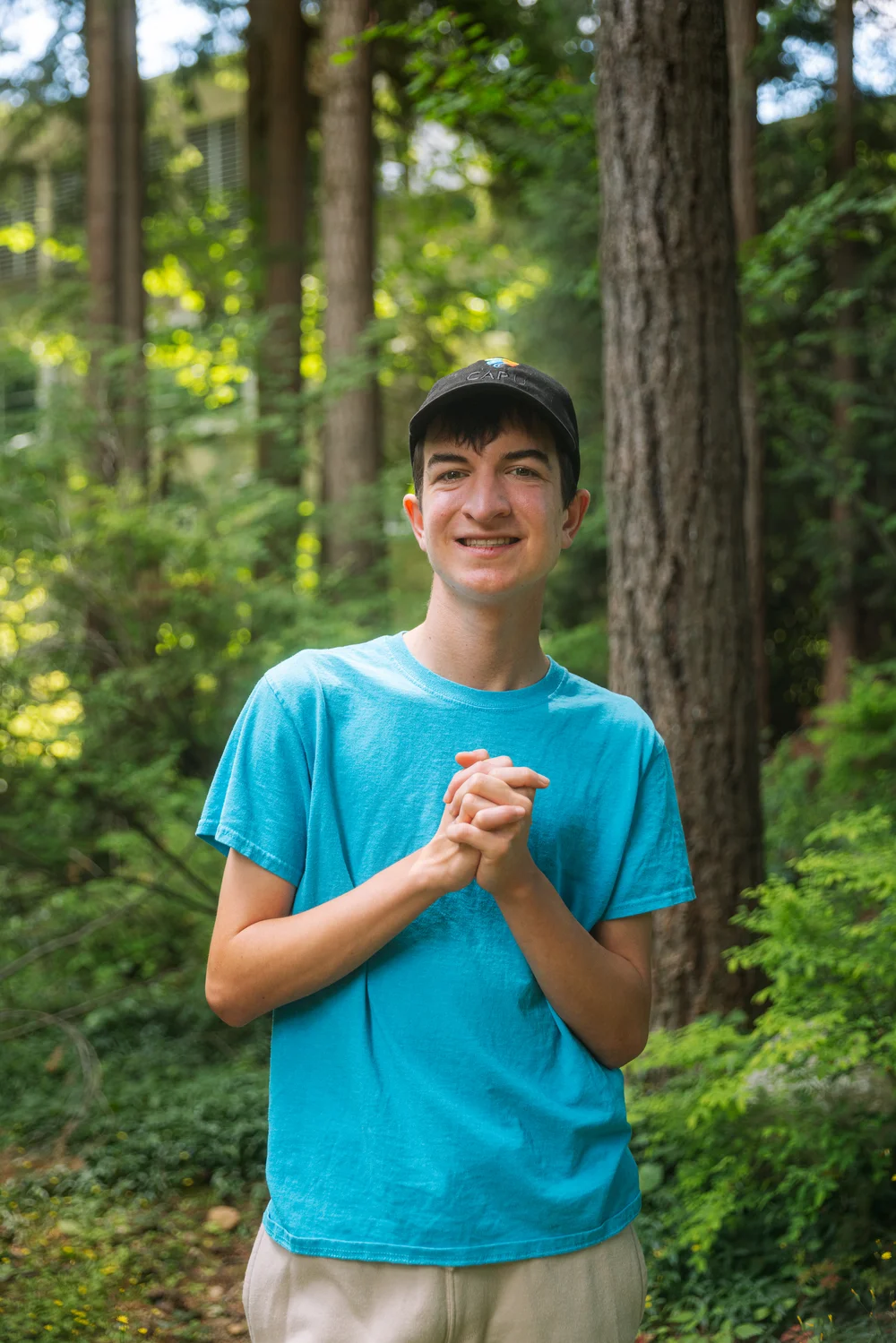
DEP grad Luke Chaplin is inspired to learn more at CapU. He is exploring class options to eventually enter the Motion Picture Arts program in the future or will be returning to the new ESD program. In between conversations showcasing his vast knowledge of film, his reserved exterior cracks open into a broad smile when asked about his CapU life.

“I really enjoy the area—the trees and all the different buildings. I like that I get to walk between classes,” said Luke. “I like working with the other students and the instructors. I like having the tasks to do and having some community connection.”

Luke Chaplin
Luke Chaplin
Discover Employability certificate, 2025

Together, DEP and the new ESD program give students more time to build confidence and apply their new skills. While many had some work experience in high school, this was often done with an education assistant. At CapU, the expectation is that they learn to navigate the school and work world independently. The new ESD program will further build these abilities.

“To my knowledge, there is nowhere in the province that has a two-year program,” said Alison. “Often, the students will repeat a program, but it’s not allowing them to develop their skills in an enhanced way like ESD will.”

With greater confidence comes bigger ambitions.
"My dream is to work behind the scenes in film," said Luke.
For Alex, it's another day-to-day passion.
"I would love to work at TransLink. I know a lot about transit, and I learned there are a lot of things that go on at the depot and wouldn't it be cool if I could do that?"

“DEP lets students have a real post-secondary experience like all their peers.”

— Alison Hale, instructor, Access Work Experience,
Faculty of Education, Health and Human Development
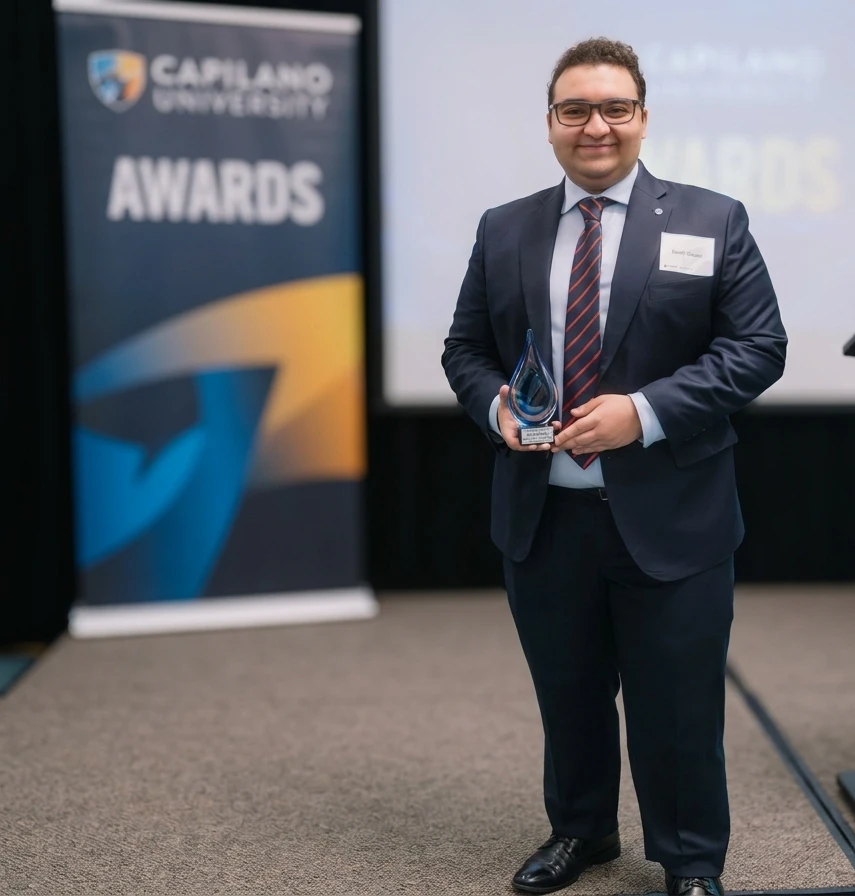
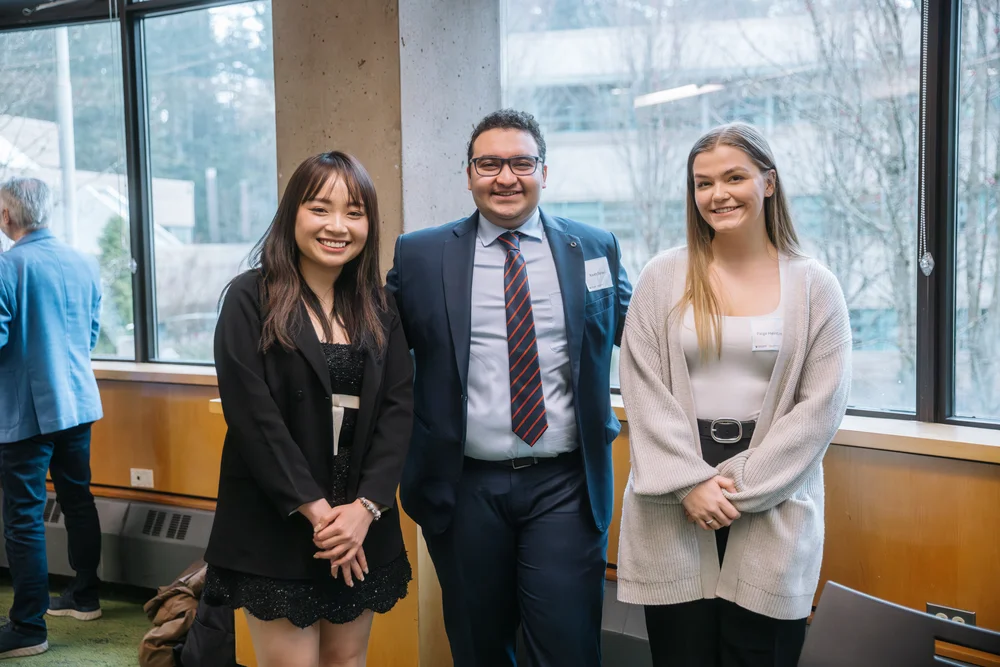
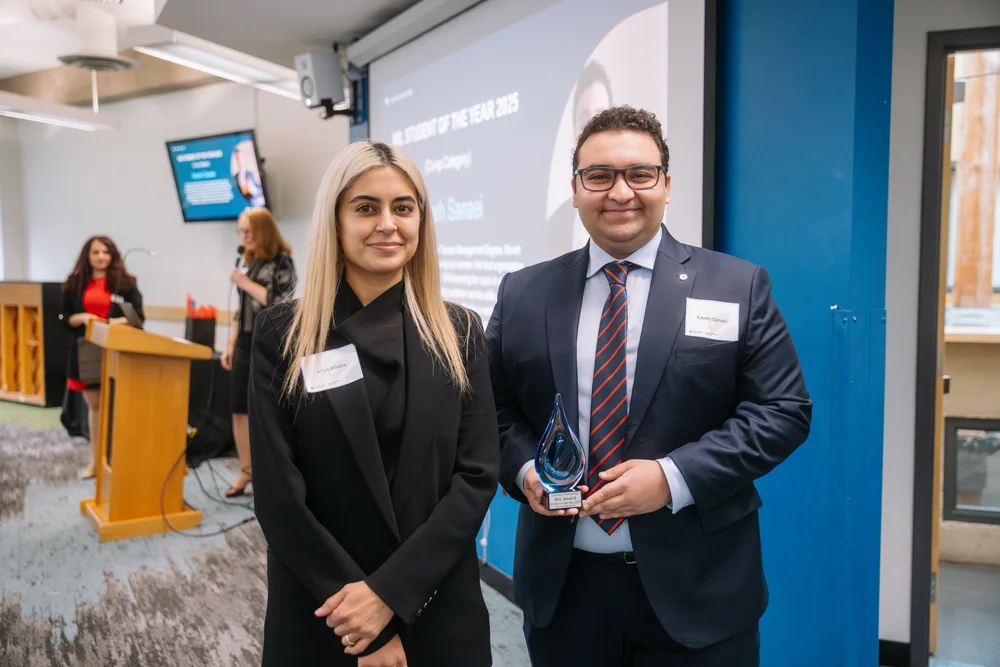
Kaveh Sanei accepting the 2026 WIL Student of the Year award Kaveh Sanei at the 2026 Work-Integrated Learning Awards ceremony Kaveh Sanei and Zack Bhatia at the Work-Integrated Learning Awards ceremony
Kaveh Sanei
Bachelor of Tourism
Management student
2026 WIL Student of the Year
Ambition · Future Investment

Learning by doing

Sitting behind the front desk of the OPUS Vancouver Hotel, Kaveh Sanei is putting his Capilano University education to the test and coming up a winner.

“When I was a kid, I was a traveller. My father’s business took us all around the world—a lot,” said Kaveh. “I was born into a business family that travelled, when you put it together, Tourism Management fit.”

The Bachelor of Tourism Management student at Capilano University is the 2026 Work-Integrated Learning (WIL) Student of the Year, an honour recognizing his exceptional work ethic, customer service skills, willingness to improve, and passion for the hotel industry.

WIL is the coming together of education and real-world experience through co-ops, internships, practicums, field placements and community-based projects. These opportunities help students build professional skills, expand their networks and prepare for meaningful careers.

“I want to own my own hotel, and it was through co-op that I was able to use my education and my interest in this business to improve my skills. My co-op gave me the base knowledge I need to move into sales, marketing, reservations and eventually management,” said Kaveh.

Zack Bhatia
Zack Bhatia, LLD, 2025

Through sponsorship of the WIL Awards, Chelsea Properties and the DoubleTree by Hilton North Vancouver, owned by CapU honorary degree recipient Zack Bhatia, helped recognize outstanding students while investing in the next generation of professionals.

“These are students who are using their education, getting experience, and it’s nice to help give them a little bit of a financial stepping stone,” said Zack.

Chelsea Properties, the company that operates the DoubleTree, has a tradition of valuing education, he said.

“We’re always telling our employees that if they want to go for further education, we are more than happy to pay for that. Capilano University does a great job with its students. When I meet students at events, I am impressed, and I hear about how difficult it is to be a student today. If you have the means, there is nothing more gratifying than giving and helping give someone a hand up.”

Although they arrived at hospitality from different paths, Zack and Kaveh share a belief in investing in future business graduates.

“I think it’s one of the most important things that businesses can do: supporting the next generation,” said Kaveh. “Nothing lasts forever, but if you are supporting the next generation, absolutely you can create a legacy of support. I am grateful for the financial award, but more importantly, it represents someone believing in and wanting to help the next generation.”

“I am grateful for the financial award, but more importantly, it is someone thinking they wanted to help the next generation. Nothing lasts forever, but if you are supporting the next generation, absolutely you can create a legacy of support.”

— Kaveh Sanei, Bachelor of Tourism Management student
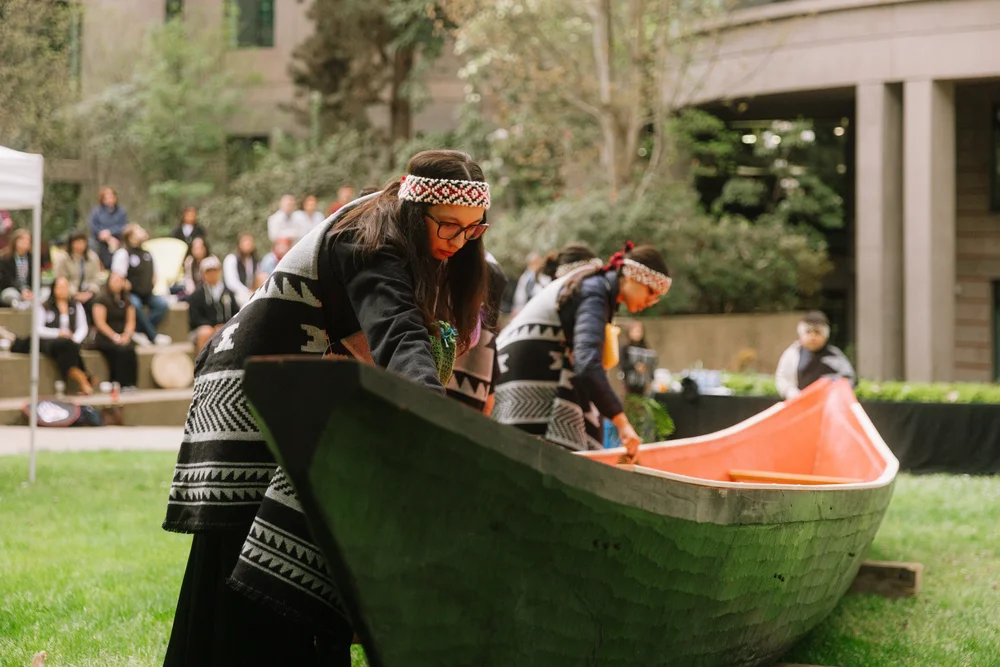
Skwxwu7mesh Nation Skwchays Awakening ceremony at Capilano University
Capilano University graduates celebrating at convocation
Capilano University students practicing yoga outdoors
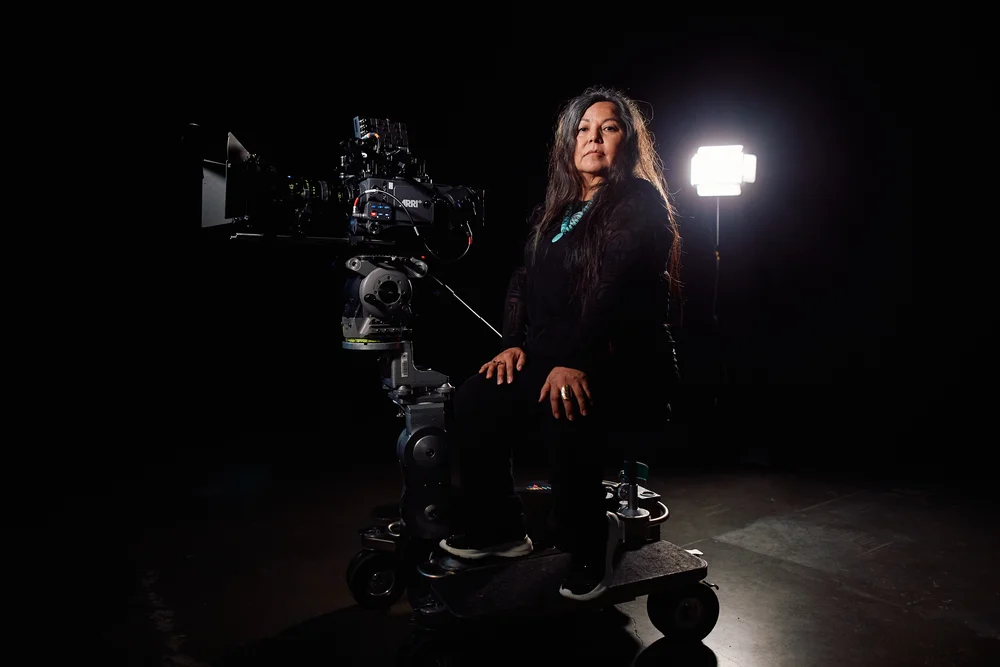
Motion Picture Arts students on a lighting set
Early Childhood Care and Education students at Capilano University
Motion Picture Arts students setting up production lighting
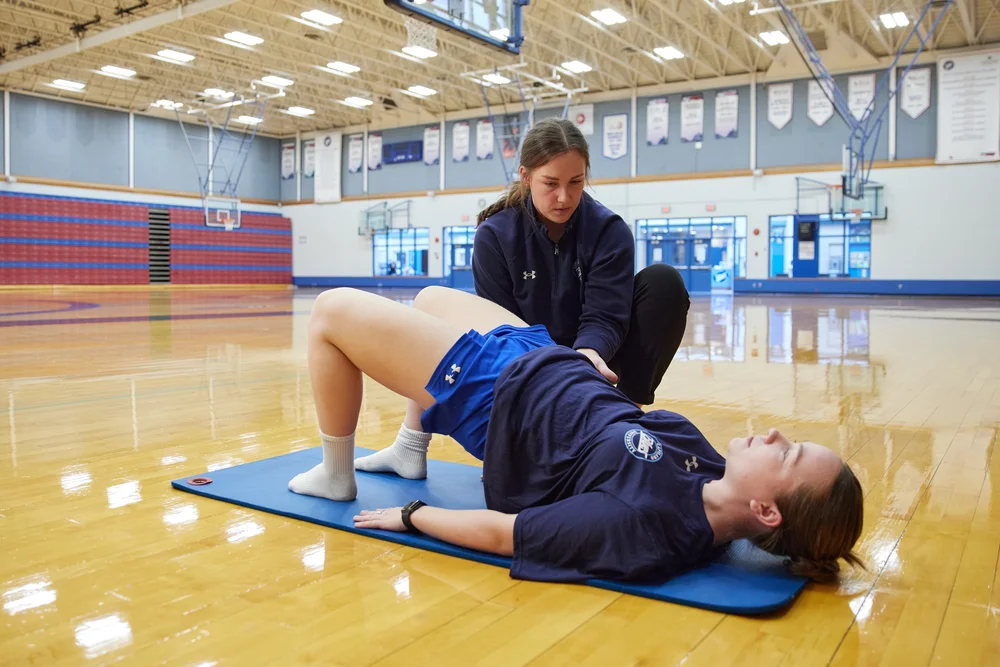
Capilano University Kinesiology students in training
April Johnson, creator, producer and director of Kokum and Dot April Johnson and the Kokum and Dot production team
April Johnson
Indigenous Independent Digital Filmmaking certificate, 2015
Kokum and Dot, Creator & Director
Leadership · Culture & Community

Fostering Indigenous film

While much of the campus is quiet for the summer semester, there was a whole world unfolding in the Nat and Flora Bosa Centre for Film & Animation, where a grandma was welcoming all into her home to learn the Seven Sacred Teachings of Cree with the help of an earnest puppet named Dot.

“I wouldn’t be here, filming a second season of Kokum and Dot without CapU, IDF [Indigenous Digital Filmmaking], FILMBA [Filmmakers in Indigenous Leadership and Business Affairs], Doreen [Manuel, Capilano University’s film centre director] or the sponsors who support these programs,” said April Johnson, creator, producer and director of Kokum and Dot, 2015 IDF diploma graduate and 2024 FILMBA participant.

Hitting the small screen in June 2026, production for season two was already well underway before the show’s debut. April says it’s been an optimistic and energetic time to be working with Indigenous storytelling. The Métis/Nehiyaw filmmaker is a perpetual student of her craft, seeking out opportunities to learn and challenge herself while also mentoring and supporting others pursuing the same dreams.

I wouldn’t be here without CapU and the sponsors who support these programs.

— April Johnson, FILMBA participant 2024, Indigenous Independent Filmmaking Certificate 2015

“CapU is a special place. It is really cool to have different Indigenous filmmakers at different stages of their career working towards the same goal. The [executive producer] on this project was one of my teachers with so much industry knowledge, and we also have recent IDF and MOPA (Motion Picture Arts) grads getting their first credits. It felt like a full-circle moment.”

Behind the scenes on the set of Kokum and Dot
Behind the scenes on the set of Kokum and Dot.

Supporting film and television is just one part of the Indigenous Digital Accelerator (IDA), founded by Doreen Manuel. Supported by funding from TD Bank Group, PacifiCan and several project sponsors, the IDA aims to empower Indigenous entrepreneurs by assisting them in scaling up their early-stage Indigenous companies.

“In creating the IDA FILMBA program, I decided that I needed to get a lot of our people trained in business affairs, because that’s the ticket to understanding the money and understanding how to elevate your portfolio and the look of your business and your work so that you can be ready to manage that kind of money,” said Doreen.

Doreen Manuel, Director, Film Centre

The programs in the IDA are designed to be delivered remotely with industry leaders teaching and offering mentoring hours, largely on the weekends and in the evenings.

“When I entered FILMBA, I had Kokum and Dot in development, which was a lot of work, and I was doing contracts to support myself. The accessibility of the program brought together a cohort of working professionals from across Canada. I would not have otherwise gotten to meet Indigenous filmmakers from all over the country,” said April.

The unique one-on-one mentorship has become one of the program’s defining strengths.

“Students just loved that because there’s a million things they forget to ask when they’re in the class or they’re too shy, and there’s a bunch of stuff that’s more complicated than giving a quick answer,” said Doreen.

Indigenous filmmakers face many barriers, from disadvantages at film festivals to systemic racism in financial institutions. Often the Indigenous style and ways of filmmaking aren’t understood by funders and festivals, but staying true to their roots is paying off with authentic experience and networking.

“Watching somebody like April succeed and then walking onto [her] set and seeing so many of our graduates there happy, just happy. This set was so alive, the emotions strong—we are helping create art. We’re in a perfect place to create the best art we can possibly create when we’re in that mood, in that atmosphere working uniquely together,” she said.

“I want to help. I want to see success. I don’t want my people, or any marginalized people, living in poverty, and I need to do anything and everything I can do to change that—film is just one way,” said Doreen.

With outside funders supporting programs like the IDA, students from across the country have opportunities they would not otherwise have.

“I am so, so grateful, seriously, thank you. I’m hopeful for the future of Indigenous film and television,” said April. “We’ve seen such a great progression in the last five to ten years, especially with the support of the Indigenous Screen Office and programs like CapU’s FILMBA and IDF.”

April noted there’s still room for growth: a lot of the stories being told focus on trauma which are valid and necessary stories, she said. But there’s just as much need to showcase humour and resilience.

“There are so many teachings that we can share for young learners and families that are very positive. I can draw on the plethora of Indigenous storylines that showcase that.”

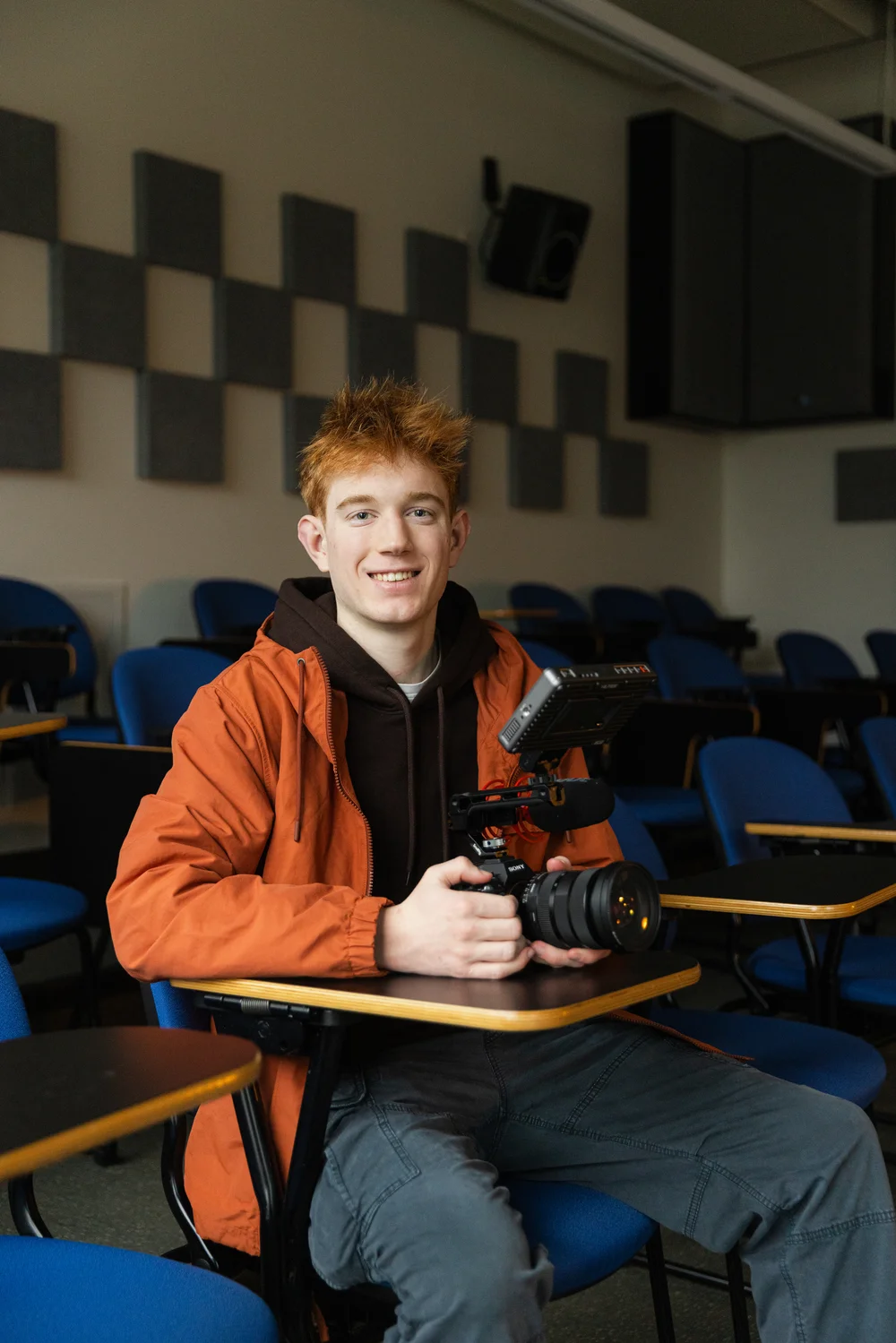
Cameron Johnson, Bachelor of Motion Picture Arts student, holding a camera rig in a CapU media production classroom
Cameron Johnson Bachelor of Motion Picture Arts student
Future & Belonging

The President’s Entrance Award is opening doors at CapU

A $1-million commitment to students.

The Award

There was some hooting and hollering when Cameron Johnson learned he had been awarded Capilano University’s President’s Entrance Award. The first-year Motion Picture Arts (MOPA) student is one of 15 students in the inaugural cohort of the newly-endowed award. Established in honour of former President Paul Dangerfield’s legacy of student-centred leadership, the President’s Entrance Award became the university’s largest donor-endowed entrance award, surpassing $1-million when it was created. Awarded to students entering bachelor’s degree programs, the award criteria adapts annually to align with CapU’s priorities.

“I worked really hard in high school, and it felt great to have all those hours be worth something—to have the effort I put into investing in my future pay off,” says Cameron. “It was a relief. I am grateful. I have a twin brother, so there were two of us starting university this year. Scholarships have helped relieve some of the financial stress.”

Choosing CapU

With an eye for a future in film, throughout the intimidating process of choosing a post-secondary institution, Cameron always had CapU as a leading choice. “It’s hard to understand all of the options. When you look at costs, it’s not always clear. In a program like film, depending on the school, you may have to own more of your own equipment. You may have to self-fund your third- and fourth-year films,” he explains. “CapU might not have the lowest tuition, but when you consider value and all of the resources included, my family and I felt more confident about the long-term costs of the program.”

Cameron Johnson working the audio mixing board in CapU's media production lab

A Space to Belong

The President’s Entrance Award also helped Cameron and his family decide that he would live in CapU housing rather than commute from Coquitlam, shaping his student experience in meaningful ways. “MOPA is an intense program, and the hours are long. Being able to live with my classmates and learn from upper-year students who share their understanding and passion has made CapU feel like home. I see my brother commuting to another university and I am having a much different experience.”

“I feel like a part of CapU, and CapU feels like me.”

Cameron Johnson, Bachelor of Motion Picture Arts student
Total Impact: for 2025-26 $2,066,817 Awarded to students to support them in their education journey
1 in 8 Students received a financial award during the 2025–26 academic year
911 Gifts supported 122 programs at CapU
1,492 Scholarships, bursaries and awards given during 2025–26 — an increase of 8.5%
+75% Growth in donor-funded entrance awards over the previous academic year

New Donor Funded Awards

A student in business attire in a professional setting

Association of Women in Finance Award

Climbing the ladder and reaching a hand back to help the next generation spurred the Association of Women in Finance to create an award in the group’s name. The nonprofit professional organization has been supporting women in the finance sector since 1994. Recipients will be nominated by faculty and be enrolled in a Bachelor of Business Administration Degree program with a concentration in Accounting or Financial Planning.

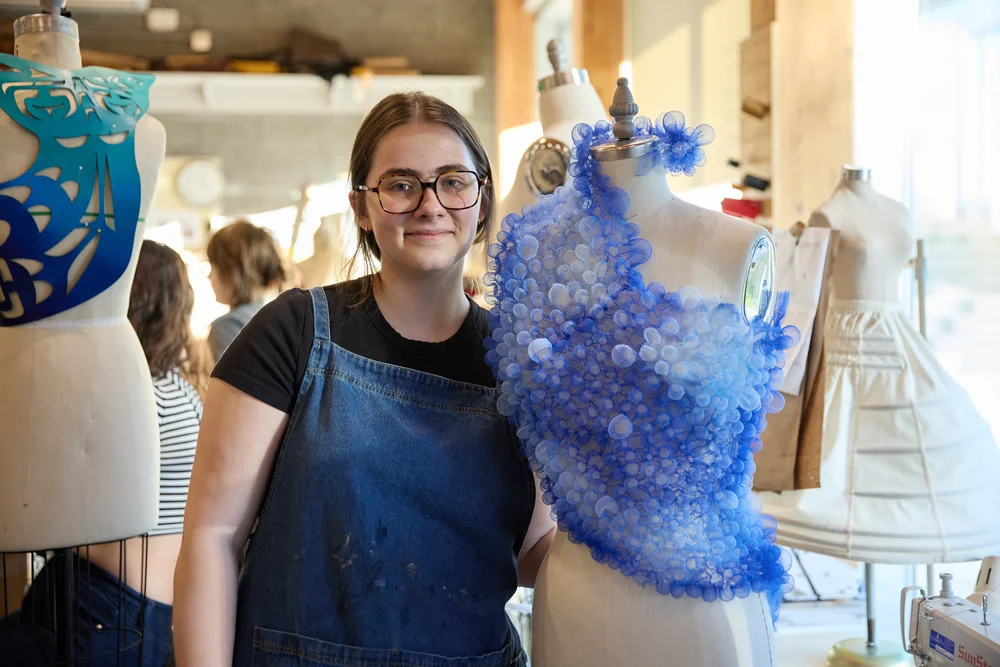
A costuming student beside a garment on a dress form in the CapU studio

Bedriska von Mandl Costuming Award

Celebrating a life of resilience and vision, the legacy of Bedriska von Mandl is proudly recognized by the von Mandl Family Foundation. A graduate of design school, Bedriska was forced to flee her home at 21 years old, escaping on the last civilian ship leaving Europe before the outbreak of WWII. A passionate supporter of the arts and culture, Bedriska believed in vibrant, experiential education that inspires the dream of a better world. This new entrance award offers students the opportunity to foster a future inspired by the same fabric and thread that led Bedriska to steadfastly hold on to hope amongst heartbreaking loss.

Capilano University School of Performing Arts students on stage

Shirley & Jack Richardson, C.M. Award

Inspired by a family gift for music spanning generations, the Shirley & Jack Richardson, C.M. Award supports students in their final year of study in the School of Performing Arts as they embark on artistic careers. Created by Garth (CapU 2025 Honorary Degree Recipient), Brook, and Kelly Richardson to honour their parents Shirley, a gifted jazz vocalist, and Jack, one of Canada’s most influential music producers.

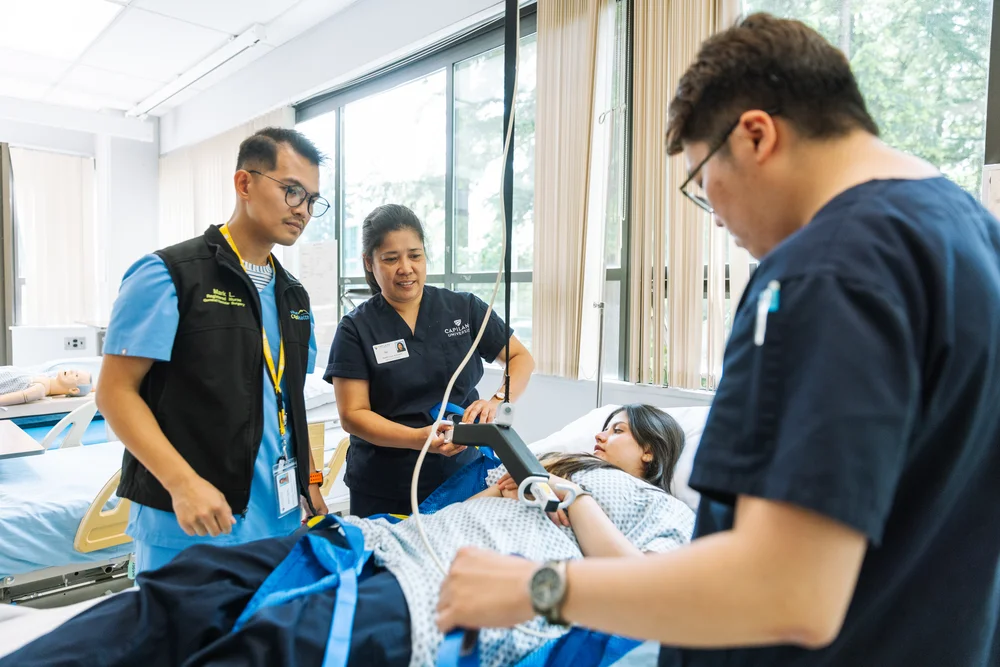
A Health Care Assistant student caring for a patient in a CapU lab

Skills For Hope Foundation Award

Financial barriers should never prevent students from achieving their educational and career aspirations — a core belief of the Skills For Hope Foundation. Its mandate to empower students to achieve their dreams has led to the creation of the Skills For Hope Foundation Award to help students in the Faculty of Education, Health & Human Development.

With Thanks

Donor relationships are built one conversation at a time. And time and again, those conversations remind me why this work matters.

Every gift we receive carries a story behind it: a value someone holds, a memory of a teacher (or coach) who connected, a belief that the next generation deserves a real chance. That's what I hear when donors share why they give to CapU. And it's what I see reflected when students tell us what that support has meant to them.

This year brought new energy to our campus: a new president, new award recipients taking their first steps at CapU and students across our programs pushing further than they thought they could. None of it happens without you.

If you ever want to see that impact up close—to meet the students your generosity is reaching or to talk about how your giving aligns with what matters most to you—we would genuinely love to hear from you. That connection is something we don't take lightly.

Thank you for your continued trust in CapU and in the students we serve together.

Jennifer Bryan
Director, Philanthropy & Alumni Relations
Capilano University
Jennifer Bryan, Director, Philanthropy & Alumni Relations, Capilano University